
One-way vs mutual NDA: what's the difference?

A one-way NDA protects information from one party. It's ideal when a business shares confidential data with a freelancer or vendor, and the flow of sensitive information really only runs in one direction.
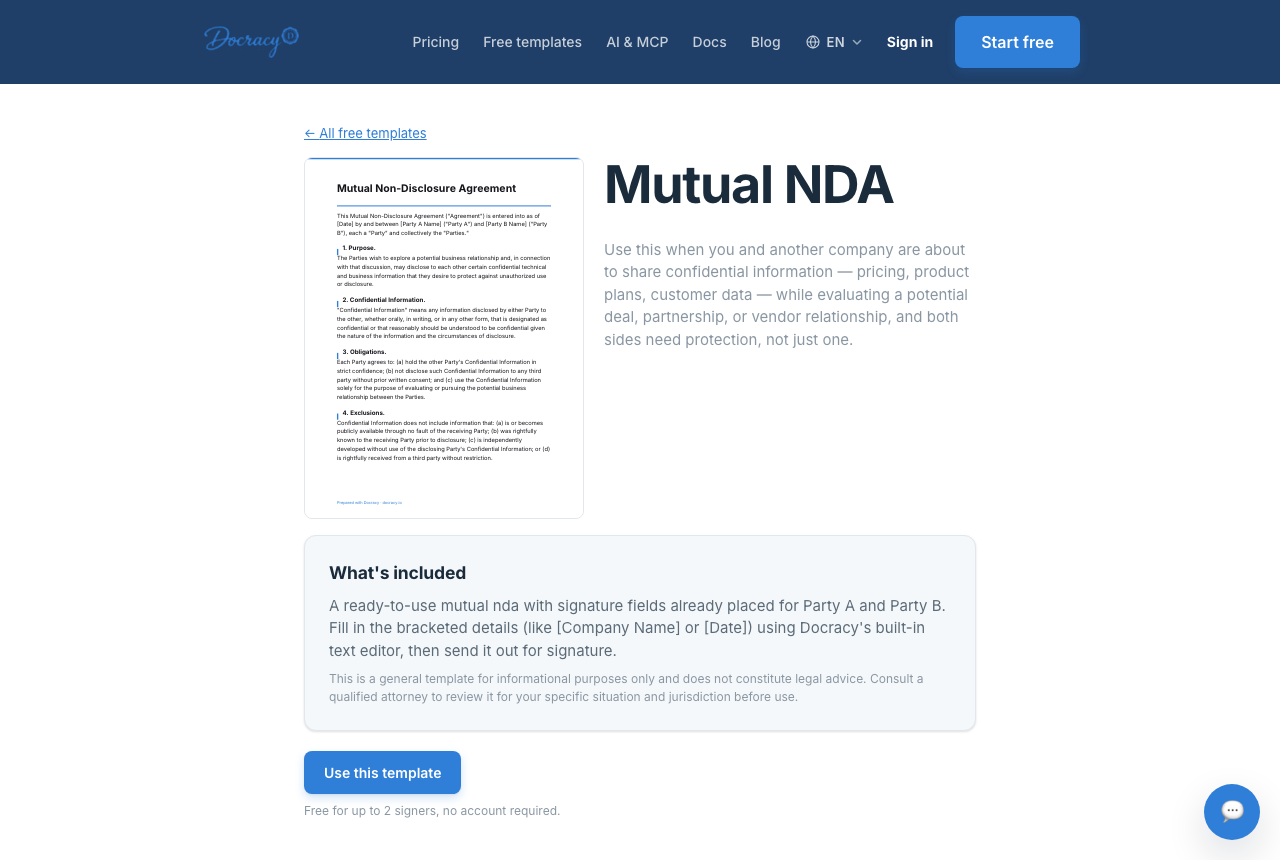
A mutual NDA protects information from both sides. It's used when two companies collaborate, share code, or exchange business plans — situations where each party has something to lose if the other one talks.
Both types rest on the same legal foundation — a promise not to disclose or misuse specific information for a defined period. If you want the fundamentals of what an NDA actually is and what it needs to cover before picking a type, that's worth reading first.
Background: what is an NDA and when do you need one?
How to tell which one you need
Ask a simple question before you pick a template: after this conversation, will only one side know the other's secrets, or will both? If a client is briefing a freelancer on internal pricing, that's one-way. If two founders are comparing product roadmaps before a possible merger, that's mutual — even if one side feels like they're sharing "more."
Choose a one-way NDA when:
- You hire a freelancer and need to share internal documents, client lists, or product plans with them
- You onboard a contractor who will see systems or data your business doesn't want exposed
- You're briefing a vendor before a project starts, and they have nothing comparably sensitive to protect
Choose a mutual NDA when:
- You enter a partnership where both sides will share internal information to evaluate the deal
- You negotiate a merger or acquisition and due diligence runs both directions
- You exchange sensitive business plans, code, or financials with another company as equals
Side by side
- Direction of disclosure — one-way flows one direction only; mutual flows both ways under matching obligations
- Typical relationship — one-way: client and contractor, buyer and vendor; mutual: partners, co-founders, an acquirer and a target
- What's actually covered — a one-way NDA only protects the discloser's information, so anything the other party shares back is unprotected
- Drafting complexity — a mutual NDA needs symmetric obligations for both sides, which is why some templates default to mutual even when the relationship isn't
A mistake worth avoiding
Using a mutual NDA "to be safe" when only one side is actually sharing anything sensitive isn't wrong, exactly, but it can create confusion later — the party with nothing to protect has no real incentive to honor confidentiality obligations that don't apply to them in practice. When the relationship is genuinely one-directional, a one-way NDA is simpler and clearer for everyone.
What happens if you use the wrong type
The more expensive mistake runs the other way: sending a one-way NDA when the relationship is actually mutual. If both sides end up sharing sensitive information but only one direction was ever documented, whatever the "protected" party discloses back is sitting outside the agreement entirely — there's simply no clause covering it. That gap usually isn't noticed until it matters, which is the worst time to find out.
More mistakes to watch for when sending an NDA
When more than two parties are involved
Mutual NDAs aren't always just two companies — a three-way joint venture, or an acquisition where a target company's founders sign alongside the buyer, both still need matching obligations for everyone involved. In those cases, whether the document is one-way or mutual, it helps to control the order signatures happen in. Docracy supports sequential signing, where each party is notified only after the one before them finishes, and parallel signing, where everyone gets the document at once — useful when a mutual NDA needs, say, both founders to sign before the buyer countersigns.
Frequently asked questions
Can a one-way NDA be converted to mutual later?
Yes — if a one-way relationship evolves into something more collaborative, it's normal to sign a new mutual NDA rather than trying to retroactively amend the original one-way agreement.
Which one do most freelancers need?
Usually one-way, since a client is typically the one sharing sensitive information with the freelancer, not the other way around. That said, if you're a freelancer sharing your own proprietary process or tooling, a mutual version protects your side too.
Full guide: why freelancers should always use NDAs
Does a mutual NDA cost more to send than a one-way one?
Not on Docracy — sending a document to two or fewer signers is free regardless of which type it is, and free templates exist for both one-way and mutual NDAs. Pricing depends on signer count, never on the type of agreement.
Is one type more enforceable in court than the other?
No — enforceability comes down to how specifically the agreement is drafted (clear definitions, a real term, defined consequences), not to whether it's structured as one-way or mutual. A vague mutual NDA is just as weak as a vague one-way NDA.
Both NDAs can be signed online in minutes, with no account required for the person signing.
How to sign an NDA online — step-by-step
Why teams start with Docracy
“Docracy is a great product that I have tested and am using. It is easy to use, has good tools, is always up to date, and implements new features. Highly recommended.”— DACH Advisory


Also: Compare e-sign pricing · Free mutual NDA template
No account required for up to 2 signers.