
What is a vendor agreement?
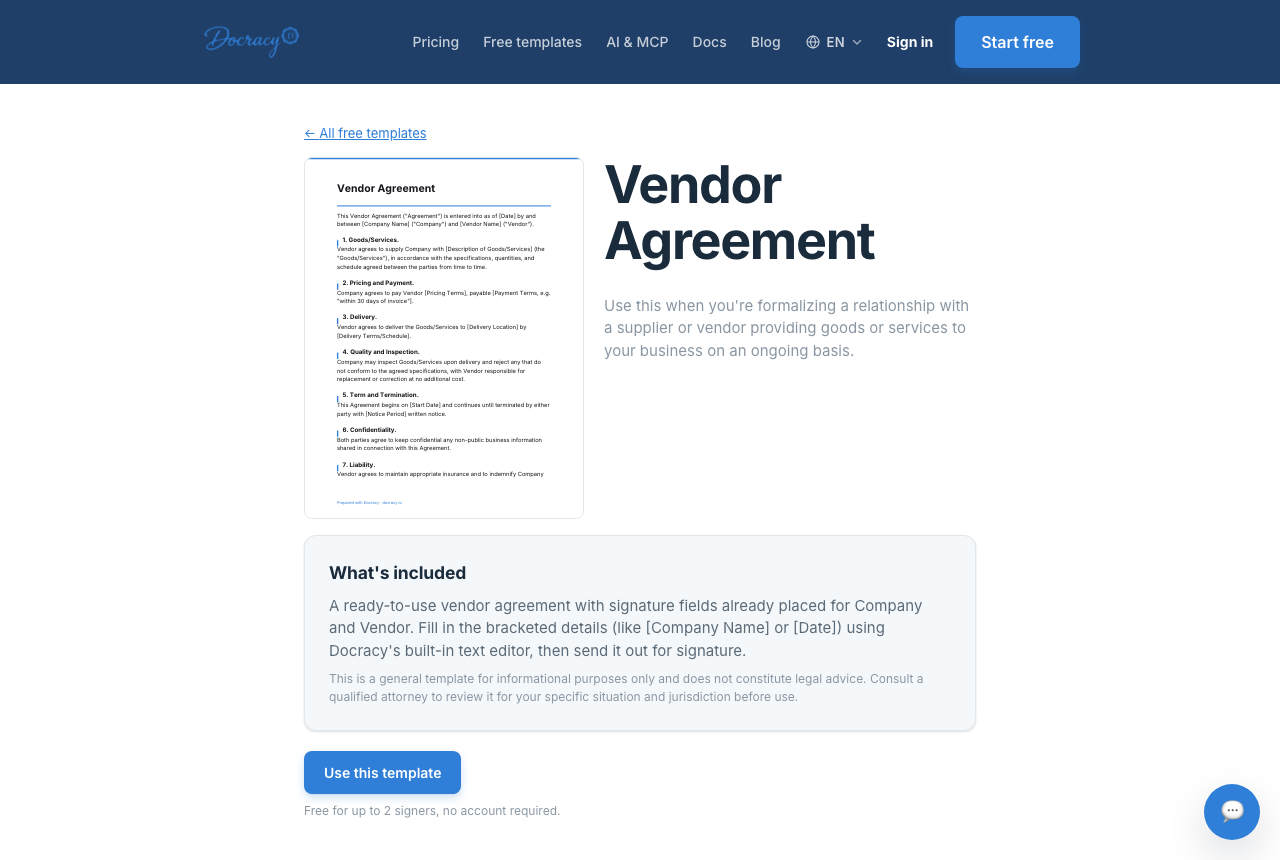

A vendor agreement is the document that turns "we're working with this supplier" into something specific enough to point back to when a delivery is late, a price changes, or a dispute comes up. It defines responsibilities, pricing, delivery terms, and confidentiality between a business and its suppliers — and its value shows up less on the day it's signed than months later, when something inevitably goes sideways.
What a vendor agreement typically covers
- What's being supplied — goods, materials, or a recurring service
- Pricing and payment terms, including how price changes get handled over time
- Delivery terms — schedule, method, and what counts as a missed deadline
- Confidentiality — especially if the vendor sees internal pricing, specs, or customer information
- Termination — how either side can end the relationship, and on what notice
Price-change clauses: the part most agreements leave vague
Supplier costs move. A vendor agreement that doesn't say how price increases get communicated leaves that entirely to whoever brings it up first — usually the vendor, usually without much notice. A workable clause is specific on three things: how much notice is required before a price change takes effect (30 days is common for routine supplies), whether increases are capped to a percentage or tied to a stated index, and what a business's options are if it doesn't want to accept the new price — cancel the next order, renegotiate, or exit the agreement outright. A bakery buying flour on a standing agreement, for example, might cap any single price increase at 8% with 30 days' written notice, and reserve the right to walk away from the agreement entirely if two increases land within the same year.
Handling delivery disputes before they happen
Delivery terms only do their job if they define "late" in a way that isn't up for debate later. That means stating the expected delivery window, what grace period (if any) applies before a delay counts as a breach, and what remedy follows — a credit toward the next order, a right to source the same materials elsewhere for that cycle, or, after repeated misses, a right to terminate. Without those specifics written down, a missed delivery becomes a conversation about goodwill instead of a conversation about what was agreed, and goodwill conversations rarely end in anyone getting made whole.
Vendor agreement vs. purchase order — a concrete example
A vendor agreement sets up the ongoing relationship — the general terms that apply across every order. A purchase order covers a single transaction under that relationship. Take that same bakery: the vendor agreement with its flour supplier is signed once and sets the price per 50-pound bag, the delivery schedule, and the price-change terms above. Each week, the bakery sends a short purchase order referencing that agreement and specifying just the quantity for that week's delivery. Businesses that place recurring orders with the same supplier benefit from having both: the agreement once, then a lightweight PO for each order, rather than renegotiating terms every single time product changes hands.
Where these agreements go wrong
The most common gap is delivery terms — what actually counts as "late," and what happens if it is. Without that written down, a missed delivery becomes a conversation about goodwill instead of a conversation about what was agreed. The second most common gap is confidentiality: a vendor that sees cost structure, customer volumes, or specs during the course of supplying you has effectively been given business intelligence, whether or not that was the intent — a confidentiality clause is what makes that exposure something you agreed to knowingly rather than something that just happened.
Getting it signed without slowing down the relationship
Vendor agreements often need sign-off from more than one person — a procurement contact on your side, an owner or manager, and a representative from the vendor. Routing it as an ordered signing sequence means it moves through approvals in the right order automatically, and a timestamped audit trail records exactly when each party received, opened, and signed it — which becomes the reference point if a delivery or pricing dispute ever needs to be settled by what was actually agreed to, not what someone remembers agreeing to.
Frequently asked questions
Does a vendor agreement need to be renewed every year?
Not necessarily — it depends on the term you set. Some vendor agreements run indefinitely until either side cancels; others are set for a fixed term with an option to renew. Either works, as long as it's stated clearly.
Who typically drafts the vendor agreement?
Either side can, though it's common for the business receiving the goods or service to propose the terms, since they're usually the one with more to lose from vague delivery or pricing language.
What if the vendor won't agree to a price-change notice period?
That's worth treating as information in itself — a supplier unwilling to commit to any notice period on pricing is telling you how that relationship is likely to go. It doesn't have to be a dealbreaker, but it's worth building in a shorter agreement term so you're not locked into an open-ended relationship on those terms.
Send a vendor agreement — free template
Why teams start with Docracy
“Docracy is a great product that I have tested and am using. It is easy to use, has good tools, is always up to date, and implements new features. Highly recommended.”— DACH Advisory


Also: Compare e-sign pricing · Free mutual NDA template
No account required for up to 2 signers.