
What every client contract should include
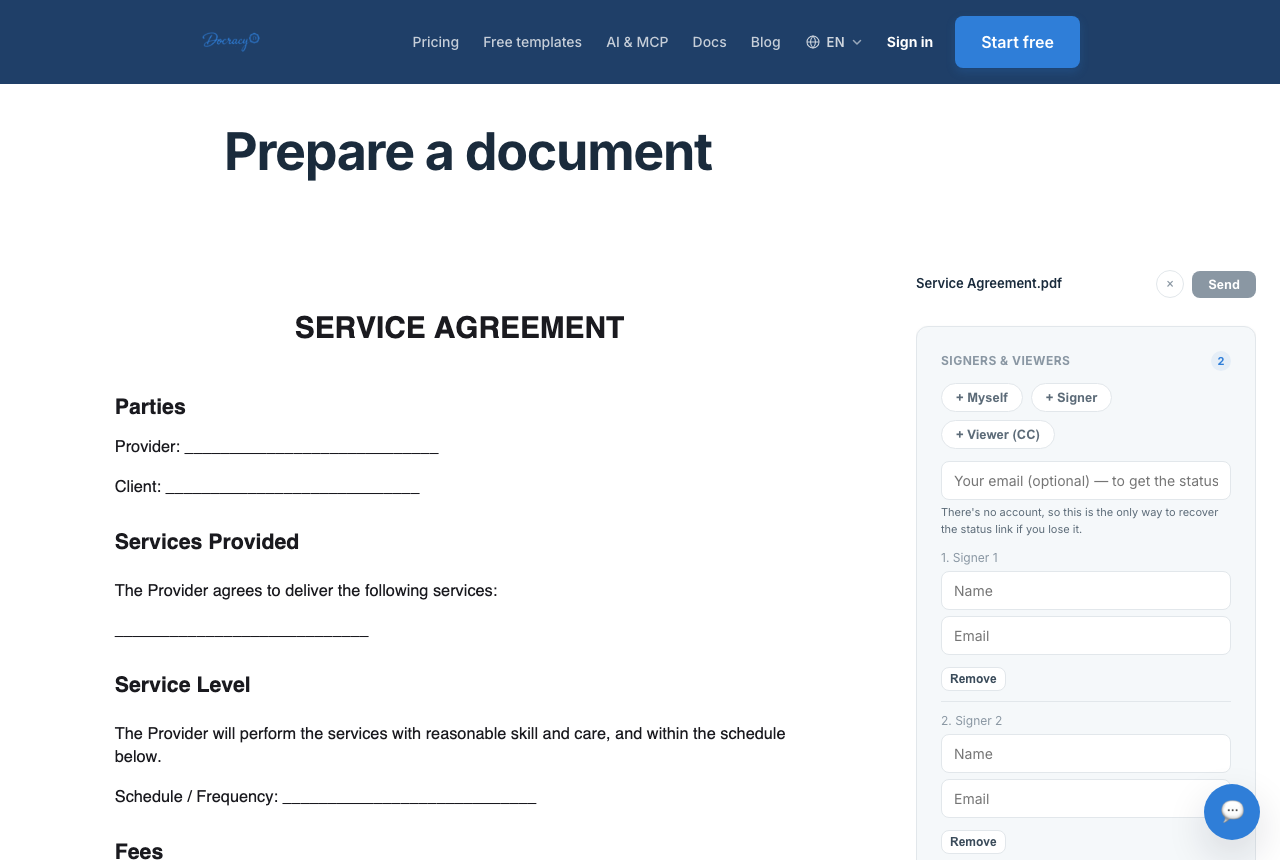

Most client disputes don't come from bad faith — they come from a contract that never actually pinned down what "done" looks like. A good client contract closes that gap before work starts, so both sides are arguing from the same document instead of two different memories of a kickoff call.
The essentials every client contract should include
- Scope of work
- Timeline
- Payment terms
- Responsibilities
- Confidentiality
- Termination rules
Scope of work: the section that prevents the most arguments
Scope creep is the single most common source of client friction, and it's almost always a scope problem, not a client problem. Spell out specifically what's included — number of revisions, what counts as a "page" or "deliverable", and what's explicitly out of scope. If it's not written down, assume it will come up as a disagreement eventually.
A useful habit: describe scope in countable units wherever possible — three homepage design concepts, up to two rounds of revisions per concept, five total pages of copywriting — rather than open-ended language like "ongoing support" or "as needed." Open-ended language reads generously to the client and vaguely to the provider, right up until the tenth request for "just one more small tweak" arrives with no clause to point to.
Responsibilities: what the client owes, not just the provider
Contracts tend to describe the provider's obligations in detail and leave the client's side as an afterthought, but a large share of delays trace back to the client, not the provider — a late round of feedback, brand assets that never arrived, a stakeholder sign-off that took three weeks instead of three days. Spell out what the client needs to supply and by when: access credentials, content or assets, feedback within a stated number of business days, and a single point of contact authorized to approve changes. If a deadline depends on the client meeting theirs, say so explicitly — most contracts don't, which is exactly why timelines slip without anyone technically breaking the agreement.
Payment terms worth spelling out
- When payment is due — on signing, on delivery, or on a milestone schedule
- What happens if payment is late — commonly a 7–14 day grace period before a late fee or pause in work applies
- Whether a deposit is refundable if the client cancels early — for example, a 50% deposit due at signing, refundable only if the provider hasn't yet started work
Confidentiality and who owns the final work
Two questions come up in almost every client relationship and belong in the contract rather than left to assumption: what happens to confidential information either side shares, and who owns the deliverable once it's finished. A simple confidentiality clause — neither side shares the other's non-public information, during the engagement or after — covers most everyday cases. Ownership is usually straightforward too: many client contracts transfer full ownership of the deliverable to the client once final payment clears, meaning the provider can't reuse chunks of it elsewhere without permission, and the client can't use it before paying in full. Anything more complex than that, like licensing part of the work back to the provider or joint ownership, is worth a lawyer's eyes rather than guessing at contract language.
Termination rules, and what a fair kill fee looks like
Most people write a contract assuming the project goes as planned and skip what happens if either side wants to end it early — which is exactly when a contract is needed most. A workable termination clause states a notice period (commonly one to two weeks), what the client owes for work already completed if they cancel, and what the provider owes back if they're the one stepping away, usually a refund of any deposit for work not yet delivered. A specific figure here, such as "client pays for all work completed through the termination date, plus 20% of remaining scope as a kill fee," prevents the argument from happening in the first place.
Frequently asked questions
Do I need a lawyer to write a client contract?
Not for most freelance or small-business work. A clear template covering scope, timeline, payment, and termination handles the vast majority of situations — a lawyer's review makes more sense for large contracts, IP-heavy work, or anything with real regulatory exposure.
What's the most commonly missing clause?
Termination rules. Most people write a contract assuming the project goes as planned and skip what happens if either side wants to end it early — which is exactly when a contract is needed most.
How many revision rounds should a client contract include?
There's no universal number, but two rounds is a common default for creative and content work — enough to make meaningful changes without inviting unlimited iteration. Whatever number is chosen, define what happens after it's used up; additional rounds billed at an hourly rate is the most common approach.
Why teams start with Docracy
“Docracy is a great product that I have tested and am using. It is easy to use, has good tools, is always up to date, and implements new features. Highly recommended.”— DACH Advisory


Also: Compare e-sign pricing · Free mutual NDA template
No account required for up to 2 signers.